
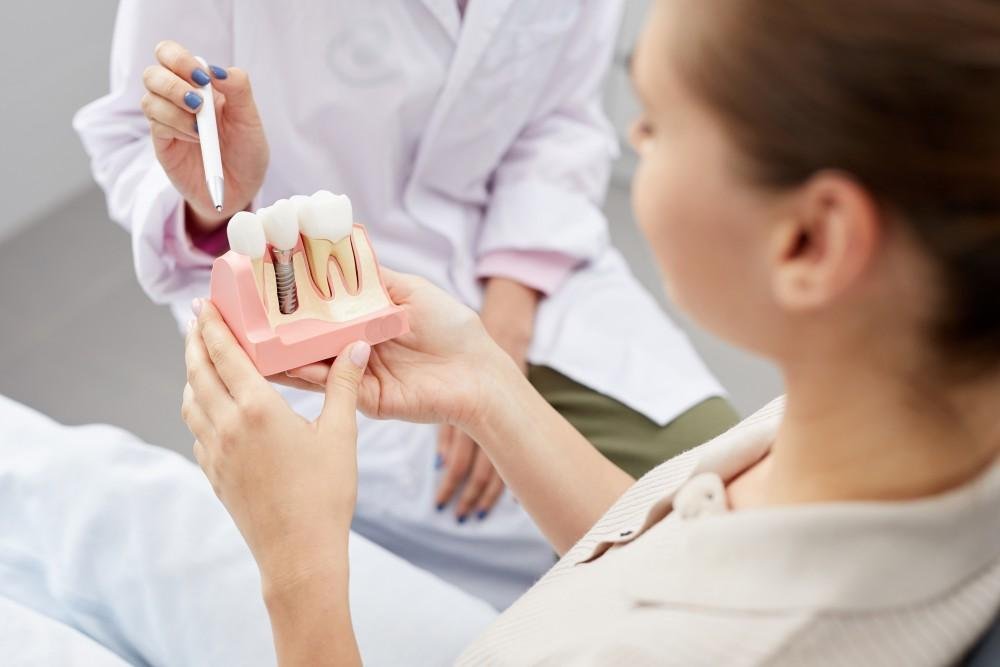
Dental implants and bridges are considered the two most effective forms of tooth replacement. Here is how to decide which will suit you best.
It is never too late to replace lost teeth, and you should try to preserve as many as possible throughout your life. When choosing a replacement, you need to consider your budget, the number of teeth you are missing, your overall health, and the condition of your surrounding teeth. From there, we can help you decide which solution fulfills your needs best. At Bayside Dental Arts, in Bayside, New York, Andrey Ilyabayev, DDS, and our team provide several options for missing teeth, including dental bridges and dental implants.
Comparing Your Options
Traditional full dentures have a serious drawback. They require any remaining teeth to be pulled, leaving your jawbone without any stimulation. If you get dentures, the bone in the jaw continues to dissolve, changing the shape of your face and requiring regular refitting.
In contrast, partial dentures, known as dental bridges, use your surrounding teeth for support. We use crowns on the adjacent, or abutment, teeth combined with a framework to hold the bridge in place, or we can support the bridge with implants, which resolves the issue of bone loss.
Dental implants are titanium posts that osseointegrate into your jawbone, acting like actual tooth roots by stimulating blood flow and preventing further bone and adjacent tooth loss. Dental implants can support restorations for individual teeth or a restoration that replaces multiple teeth or even an entire arch.
Side by Side
| Feature | Dental Bridge | Dental Implant |
|---|---|---|
| Adjacent healthy teeth | Must be reshaped to support crowns | Left untouched |
| Jawbone | Not stimulated, bone loss can continue at the gap | Stimulated, helps preserve bone |
| Typical timeline | Two visits over a few weeks | Several months, including healing time |
| Longevity | Often needs revision or replacement within 10 to 15 years | Can last decades with good care |
| Best for | A single or a few consecutive missing teeth, or a shorter timeline | Long-term stability, or when adjacent teeth should stay untouched |
Making Your Decision
How many teeth you are missing matters more than people expect. If you are missing several teeth in a row, a bridge that spans the whole gap is sometimes more practical than placing a separate implant for each one, since that can mean multiple surgical sites. For a single missing tooth or a few non-consecutive gaps, an implant is often the more efficient path.
At Bayside Dental Arts, Dr. Ilyabayev goes over these factors to help you decide which solution provides the most benefit for your situation. If cost and downtime are immediate concerns, a dental bridge might be the best option for the short term. For implants, the process is lengthier, though the results tend to be more permanent. We can also use dental implants to support a bridge, giving you a hybrid option whether you are missing several teeth or an entire arch.
If you are still unsure how to best replace your lost tooth, Dr. Ilyabayev and our team can answer your questions. To schedule a consultation, get in touch with us at Bayside Dental Arts in the Bayside neighborhood of Queens, New York, or book an appointment online.
Frequently Asked Questions About Implants and Bridges
Is a Bridge or an Implant Better if I’m Missing Several Teeth in a Row?
A bridge is often more practical for several consecutive missing teeth, since it spans the whole gap in one piece rather than requiring a separate implant for each tooth. An implant-supported bridge can combine both approaches when it fits your situation better.
How Long Do Dental Implants Last?
A 2026 systematic review and meta-analysis of long-term studies found a 20-year implant survival rate of about 93 percent, with good oral hygiene and regular checkups being key factors in long-term success.
Does a Bridge Damage the Teeth Next to the Gap?
The adjacent teeth need to be reshaped to support the crowns that hold the bridge in place, even if they were previously healthy. An implant avoids this since it stands on its own.
Which Option Has a Shorter Treatment Timeline?
A bridge is typically faster, often completed in two visits over a few weeks. An implant takes longer, generally several months, to allow time for the bone to fuse with the post before the final restoration is placed.
Can I Switch From a Bridge to an Implant Later?
Often, yes, depending on the health of your jawbone and adjacent teeth at that point. Dr. Ilyabayev can evaluate whether an implant is a good option if you decide to make a change down the road.
About the Author
Dr. Ilyabayev provides general, cosmetic, and implant dentistry at Bayside Dental Arts in Bayside, Queens, including both dental bridges and dental implants for missing teeth.