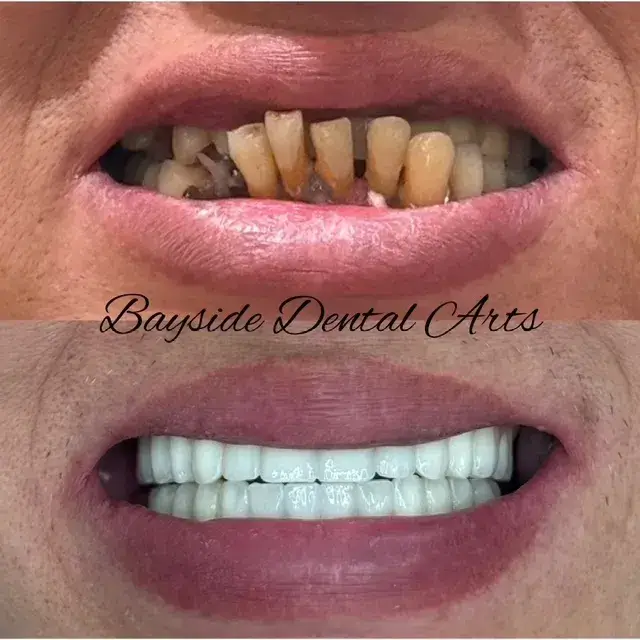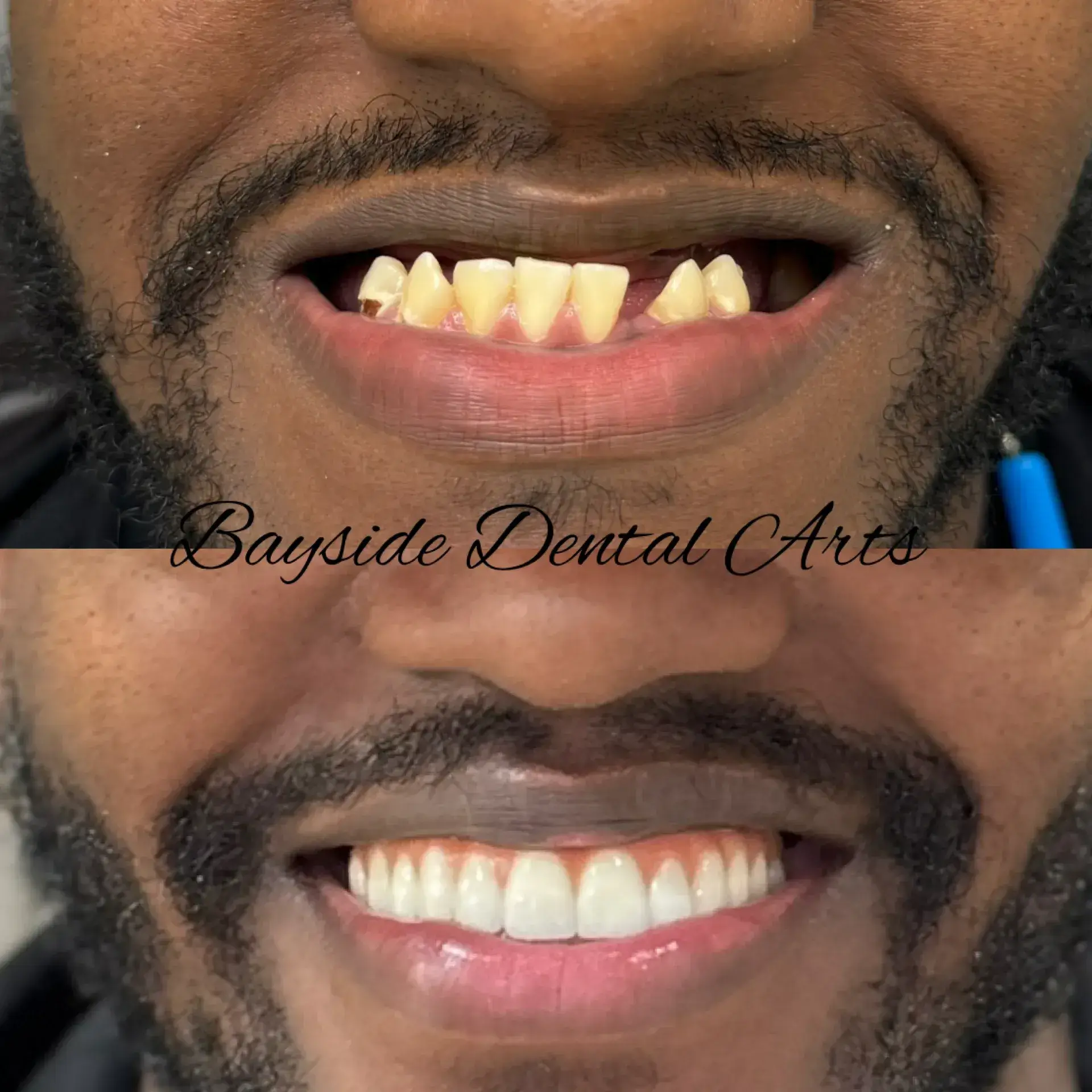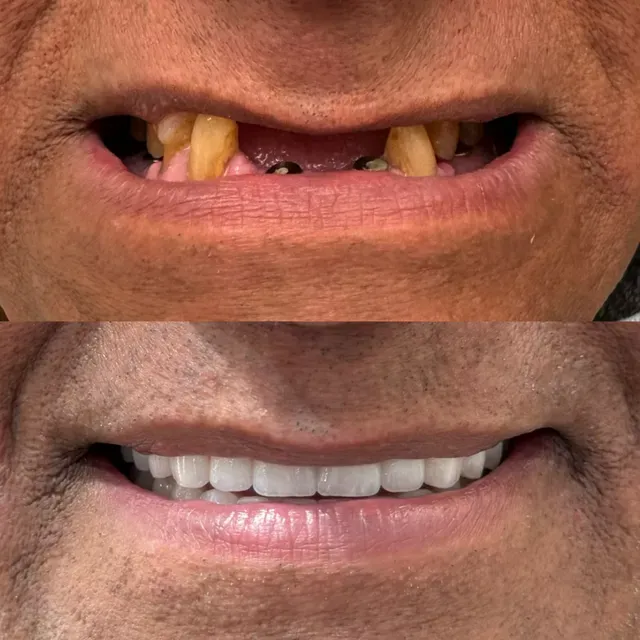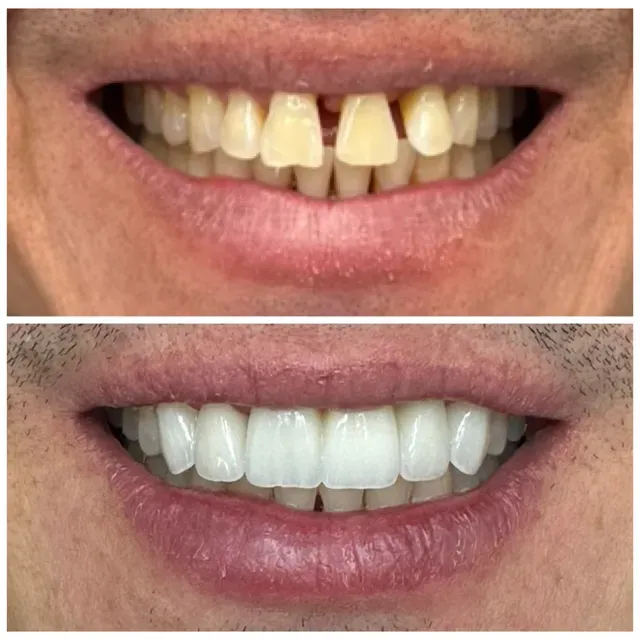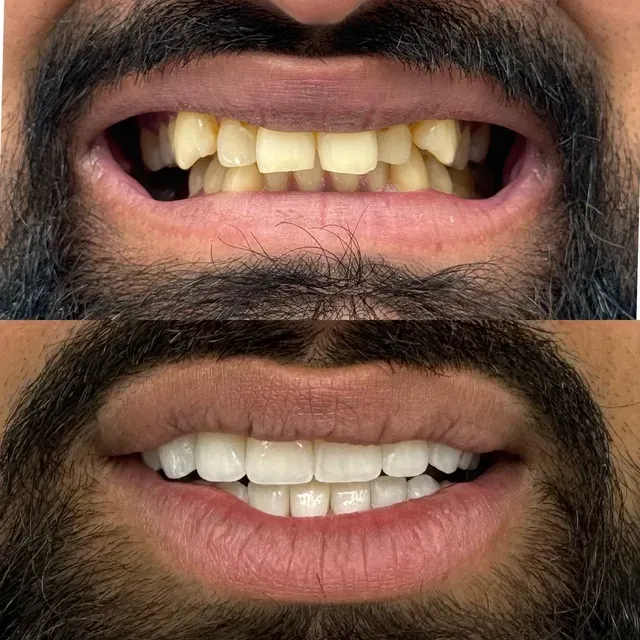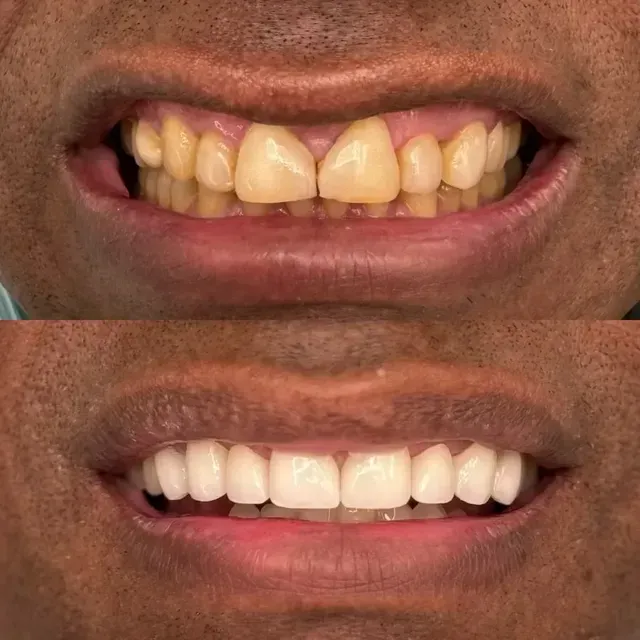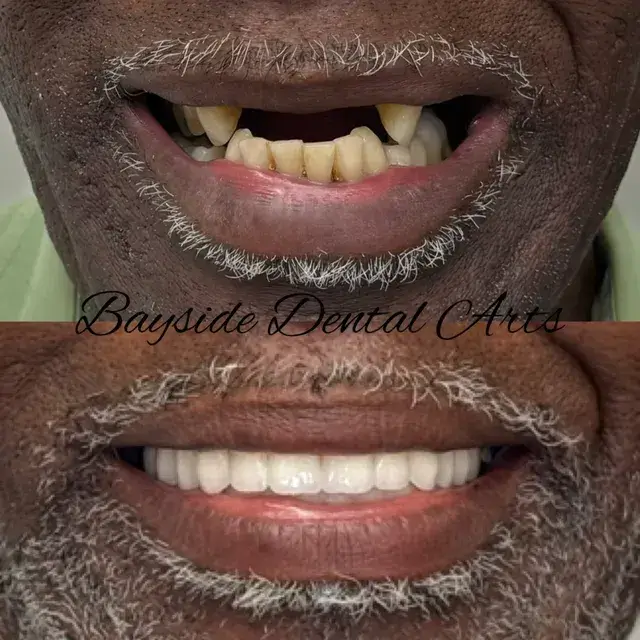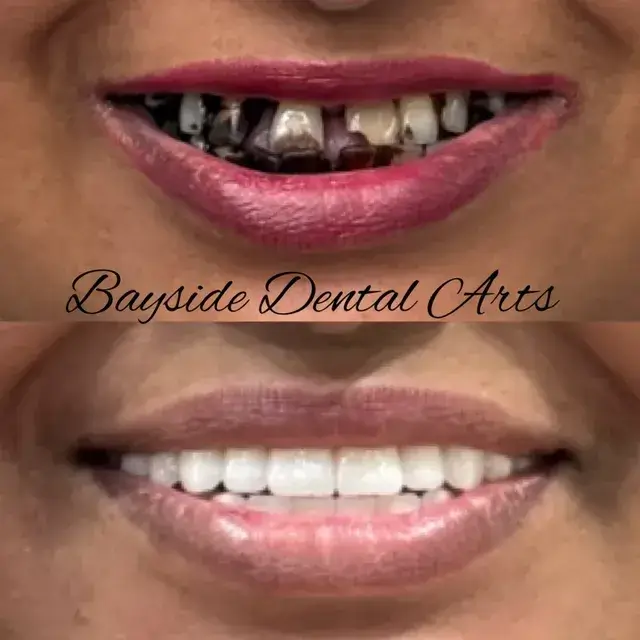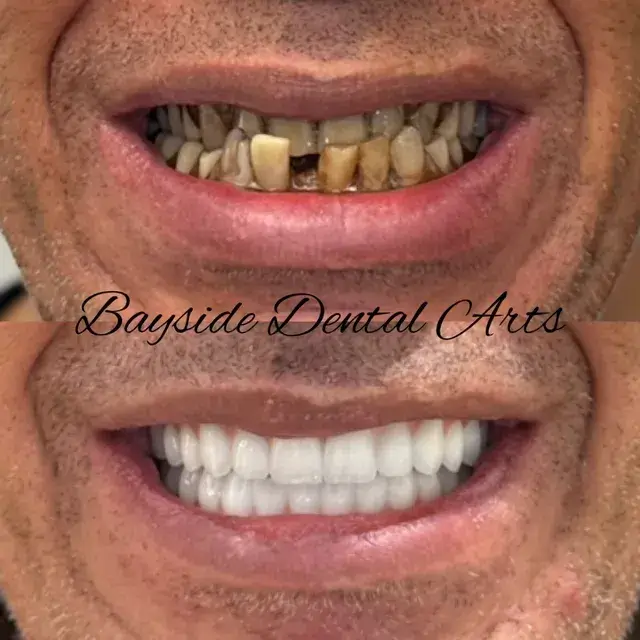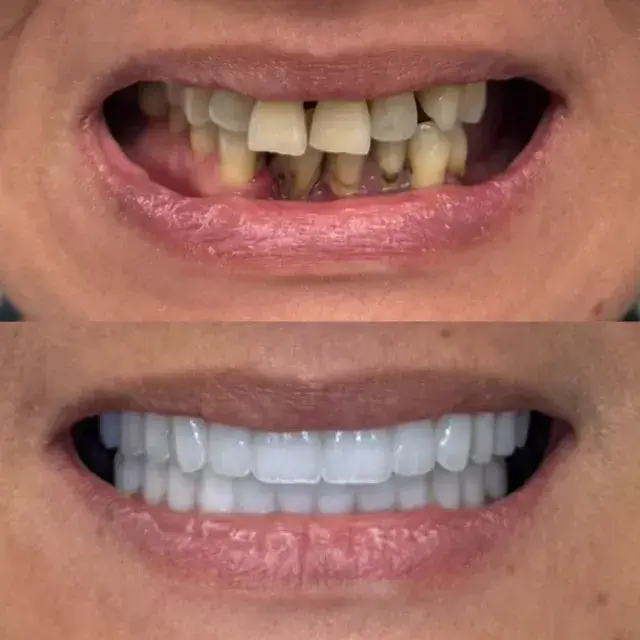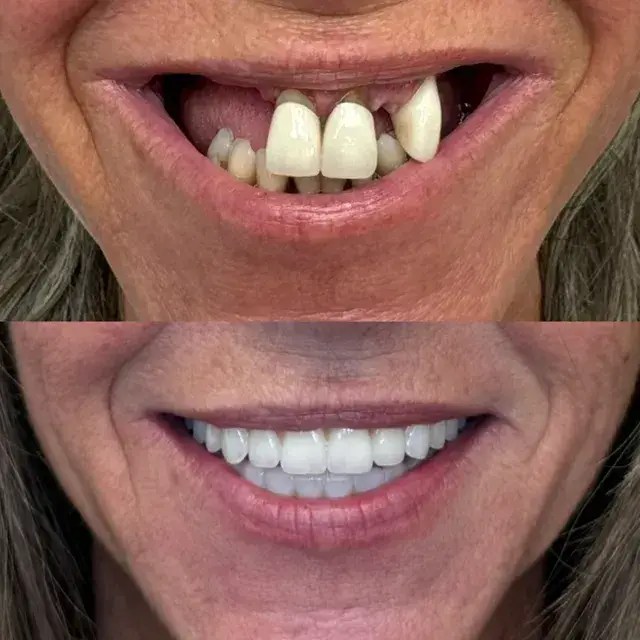
How can a dental bridge restore my smile?
A dental bridge is a custom dental restoration that replaces one or more of your natural teeth. They are fixed devices secured in place with a dental crown on each adjacent natural tooth.
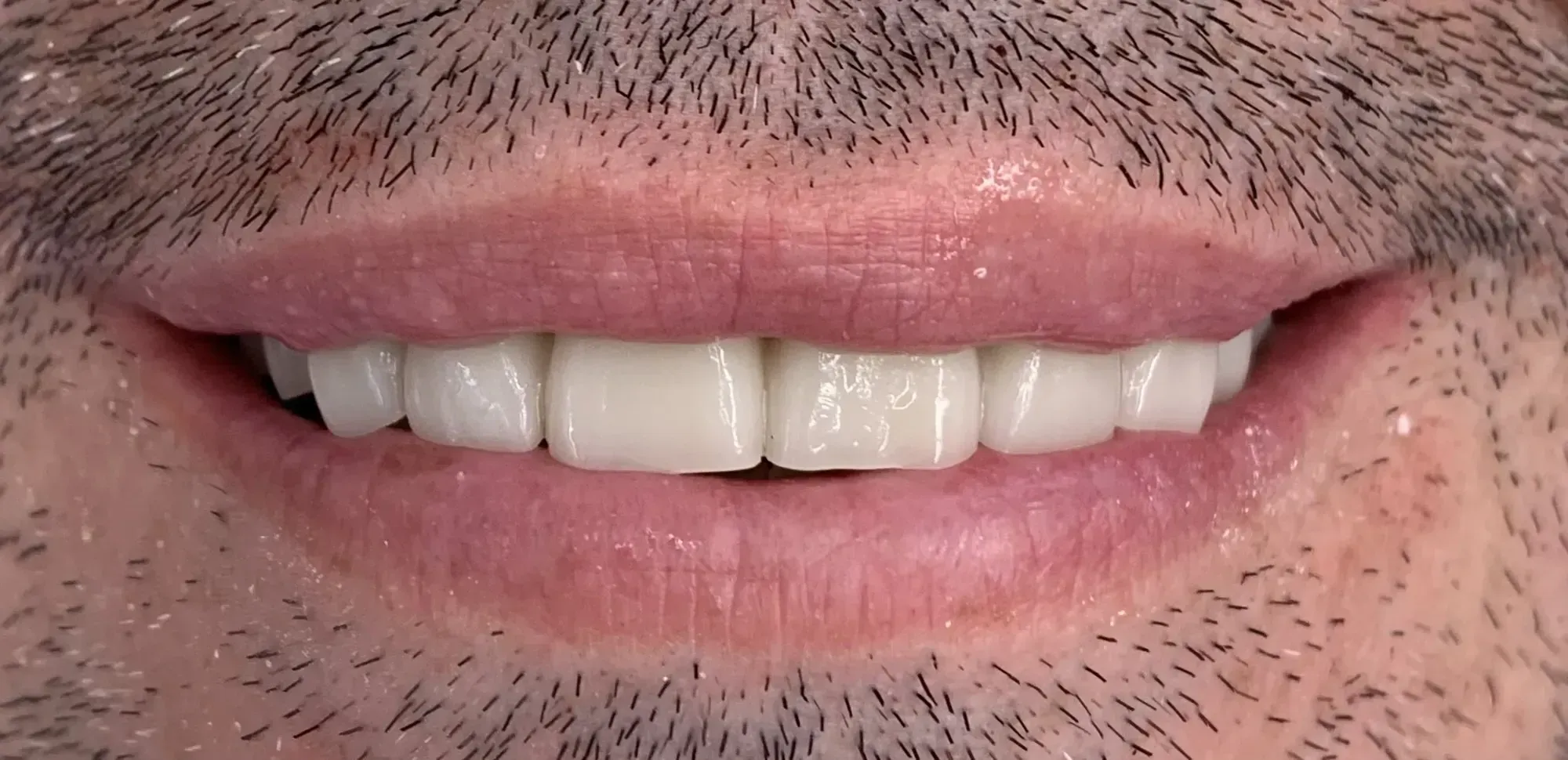
Bridges are a great way to close a gap in your smile. Thanks to advancements in dental technology, today’s bridgework is crafted to look just like natural tooth tissue. Bayside Dental Arts uses the highest quality porcelain to craft your new bridge. Once complete, your bridge is virtually indistinguishable from the rest of your teeth.
Replacing missing teeth is more than just an aesthetic issue. A gap in your smile leaves your remaining teeth without the support that a full arch of upper or lower teeth provides. This can allow your remaining teeth to begin to shift out of position.
Missing teeth also change the dynamics of your bite. Your remaining teeth can experience undue stress when your upper and lower teeth do not fit together properly while biting and chewing.
What are some of the benefits of dental bridges?
Compared to dental implants, a dental bridge is more affordable. Bridgework also takes less time than implants, as there is no need to wait for your bone tissue to fuse with the implanted metal post.
Partial dentures are another option to fill a gap in your smile. Dentures are removable, however, and don’t offer the same secure fit as a dental bridge, which is affixed in place with two dental crowns. At Bayside Dental Arts, Dr. Ilyabayev offers precision-crafted bridgework that looks and functions like natural, healthy teeth.
Do dental bridges require special care?
Once your bridge is in place, it doesn’t require much in the way of special care. Dr. Ilyabayev shows you the techniques needed to floss in the space between your bridge and gums to remove food particles, plaque, and bacteria.
Otherwise, simply maintain your normal dental hygiene routines, including brushing and flossing. As always, avoid biting down on hard, nonfood items. Don’t use your teeth to hold items in place, open packages, etc. Dr. Ilyabayev checks your bridge when you come in for your normal dental exams.
If you have additional questions or concerns about dental bridges, call the office to schedule a visit or book online.